10 Stunning Kitchen Renovation Ideas Popular in the UK This Year

share this post

Bright modern kitchen with sage green cabinets, wood island, and large windows in a contemporary British home.

1. Open-Plan Living Continues to Dominate

The desire to connect cooking spaces with dining and living areas remains strong in 2025. Open-plan kitchens create a sense of spaciousness even in modest-sized UK homes, making them particularly popular in urban areas where space comes at a premium.

If you’re knocking through walls, consider a structural engineer’s input early. This isn’t just about aesthetics – it’s about ensuring your home remains structurally sound. For smaller properties, consider a partial open plan with a breakfast bar or peninsula to zone spaces without full walls.

While removing walls creates wonderful flow, remember that cooking smells and noise will travel more freely. Consider investing in a powerful extractor fan and appliances with quiet operation if this is a concern.

2. Sustainable Materials Take Centre Stage

Eco-conscious renovation has moved from niche to mainstream, with sustainable kitchen materials now widely available at various price points.

Reclaimed wood worktops, recycled glass splashbacks, and cabinets made from responsibly sourced timber all offer environmental benefits without compromising on style. Manufacturers like Howdens and Magnet now offer eco-friendly kitchen ranges that don’t sacrifice quality.

Look for FSC-certified wood products and kitchen suppliers with clear sustainability credentials. The initial investment might be slightly higher, but these materials often prove more durable in the long run.

Eco-friendly kitchen with reclaimed wood, recycled glass, and earth-toned FSC cabinets

3. Smart Storage Solutions for British Kitchens

UK homes – particularly period properties – often present storage challenges with their non-standard dimensions and quirky layouts. Customised storage solutions are worth their weight in gold.

Pull-out larder systems, corner carousel units, and drawer dividers can increase your usable space by up to 30%. Consider tall cabinets that extend to the ceiling to maximise vertical storage – particularly useful in terraced houses with limited floor space.

For more ideas on maximising kitchen storage, check out our guide on clever storage solutions for small UK kitchens.
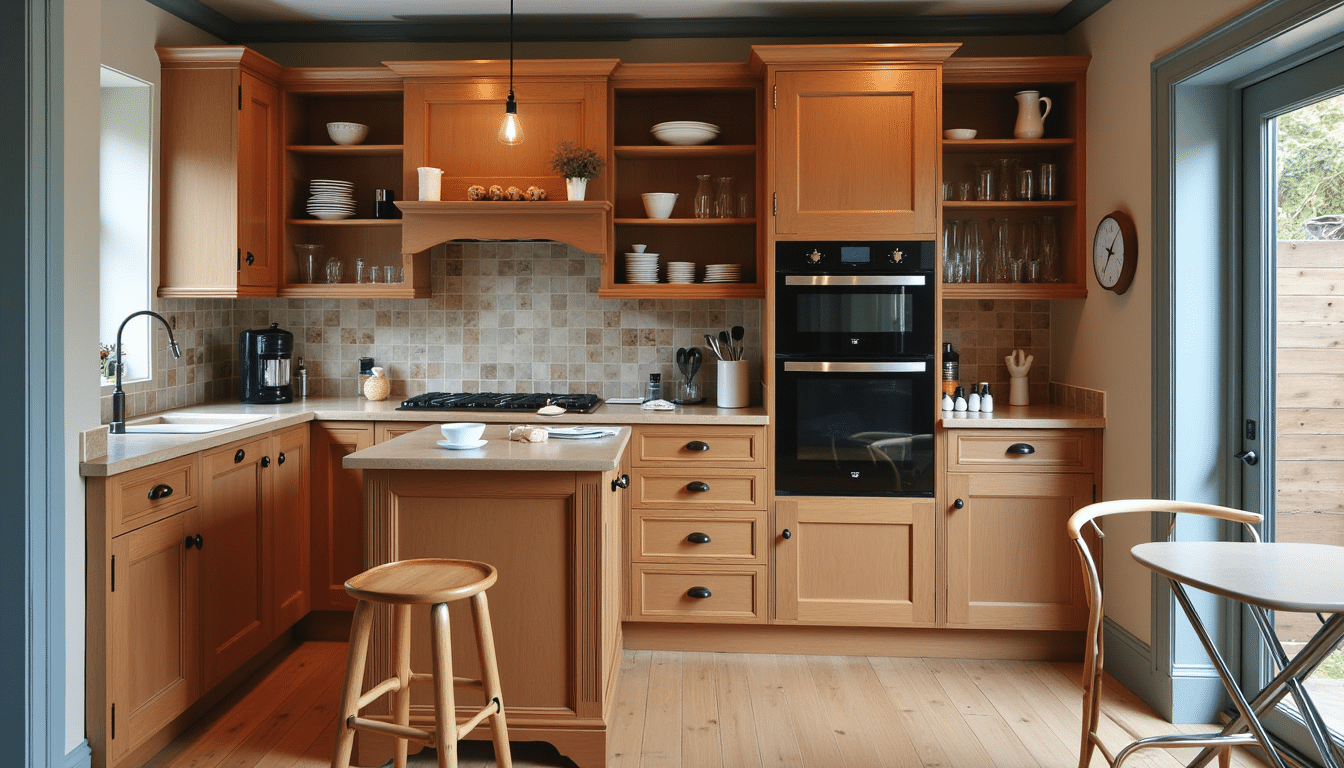
Compact British kitchen with pull-out larders, corner carousels, and tall cabinets in soft lighting.

4. Statement Lighting as Focal Points

Lighting has evolved far beyond basic functionality to become a key design element in modern kitchens. Pendant lights over islands, LED strip lighting under cabinets, and strategically placed downlights all contribute to both atmosphere and practicality.

Mixed metallic fixtures are particularly popular in 2025, with brass, copper and matte black often appearing in the same kitchen for an eclectic yet cohesive look.

Consider how your lighting works at different times of day. Dimmable options and smart lighting systems allow you to transition from bright task lighting when preparing food to more atmospheric settings for dining.

5. Two-Tone Cabinet Finishes

Gone are the days when kitchens needed to be designed in a single colour. Two-tone cabinet schemes – typically with darker base units and lighter wall cabinets – create visual interest while making spaces feel larger.

Popular combinations in 2025 include navy and cream, forest green and white, or charcoal and light grey. This approach also allows you to introduce colour without overwhelming the space.

If a complete cabinet replacement isn’t feasible, consider repainting existing units in a two-tone scheme – a cost-effective way to achieve this contemporary look.

Two-tone kitchen with navy base cabinets, cream uppers, and metallic lighting accents

6. Worktop Materials Beyond Granite

While granite has long been the luxury standard, alternative worktop materials are gaining popularity for their unique properties:

  • Quartz composites offer durability and non-porous surfaces with consistent patterning
  • Porcelain provides heat resistance and a sleek, contemporary finish
  • Sustainable wood brings warmth and can be sanded and refinished multiple times
  • Recycled materials like terrazzo made from construction waste offer eco-credentials with distinctive aesthetics

The right choice depends on your budget, maintenance preferences, and overall design scheme. For high-traffic family kitchens, I typically recommend quartz for its combination of durability and low maintenance.

7. Statement Splashbacks

Splashbacks have evolved from purely practical features to design statements. Large-format porcelain tiles, continuous sheets of toughened glass, and even metal finishes create dramatic backdrops for cooking areas.

Splashbacks that extend from the worktop all the way to ceiling height behind shelving or range cookers create a striking focal point while being easier to clean than multiple surface transitions.

For more on creating impact with splashbacks, see our article on transformative kitchen splashback ideas.

8. Integrated Technology for Modern Living

Smart kitchens are no longer futuristic concepts but practical realities. From boiling water taps and induction hobs with integrated extraction to fridges that track your grocery inventory, technology is making kitchens more efficient and convenient.

Voice-activated lighting, temperature control, and appliance operation have become increasingly common, with systems like Google Home and Amazon Alexa integrated into the kitchen environment.

Ensure your kitchen renovation includes sufficient power points and data connectivity for current and future tech additions. USB charging points and hidden charging stations help keep devices powered without cluttering worktops.

9. Islands and Peninsulas with Multiple Functions

Kitchen islands continue to evolve beyond simple prep spaces to become multi-functional hubs incorporating:

  • Seating areas for casual dining
  • Integrated appliances like dishwashers or wine fridges
  • Storage solutions on both sides
  • Pop-up power points for flexible working

For smaller UK kitchens where a full island isn’t practical, peninsulas offer many of the same benefits while taking up less floor space. Some innovative designs now include sliding or fold-down sections to adapt to different needs throughout the day.

10. Return to Natural Materials

After years of high-gloss minimalism, there’s a definite shift toward natural materials and textures in kitchen design. Stone, wood, and ceramic finishes bring warmth and character to contemporary spaces.

This trend aligns with broader interest in biophilic design – connecting our homes with nature for wellbeing benefits. Consider incorporating plants, natural light, and organic materials to create a kitchen that feels connected to the outdoors.

Mix textures for visual interest – rough-hewn timber shelving against smooth stone worktops, or handmade tiles alongside sleek cabinetry creates pleasing contrast.

11. Budget-Friendly Cabinet Refreshes

A complete kitchen renovation can be costly, but cabinet refreshes offer dramatic results at a fraction of the price. Options include:

  • Professional respray services that transform existing units with factory-quality finishes
  • Replacement doors with existing cabinet carcasses retained
  • New handles and knobs for an instant update
  • Open shelving replacing selected wall units for a more spacious feel

According to Which?, replacing just the doors and worktops can save up to 70% compared to a full kitchen renovation while still delivering significant visual impact.

12. Broken-Plan Layouts

While open-plan remains popular, broken-plan layouts are emerging as a sophisticated alternative. This approach uses partial walls, different floor levels, structural elements, or furniture to create distinct zones while maintaining a sense of openness.

This works particularly well in UK homes where completely open spaces might feel drafty or lack cosiness during colder months. Consider using a breakfast bar, bookcase, or change in flooring to subtly define cooking, dining, and relaxation areas.
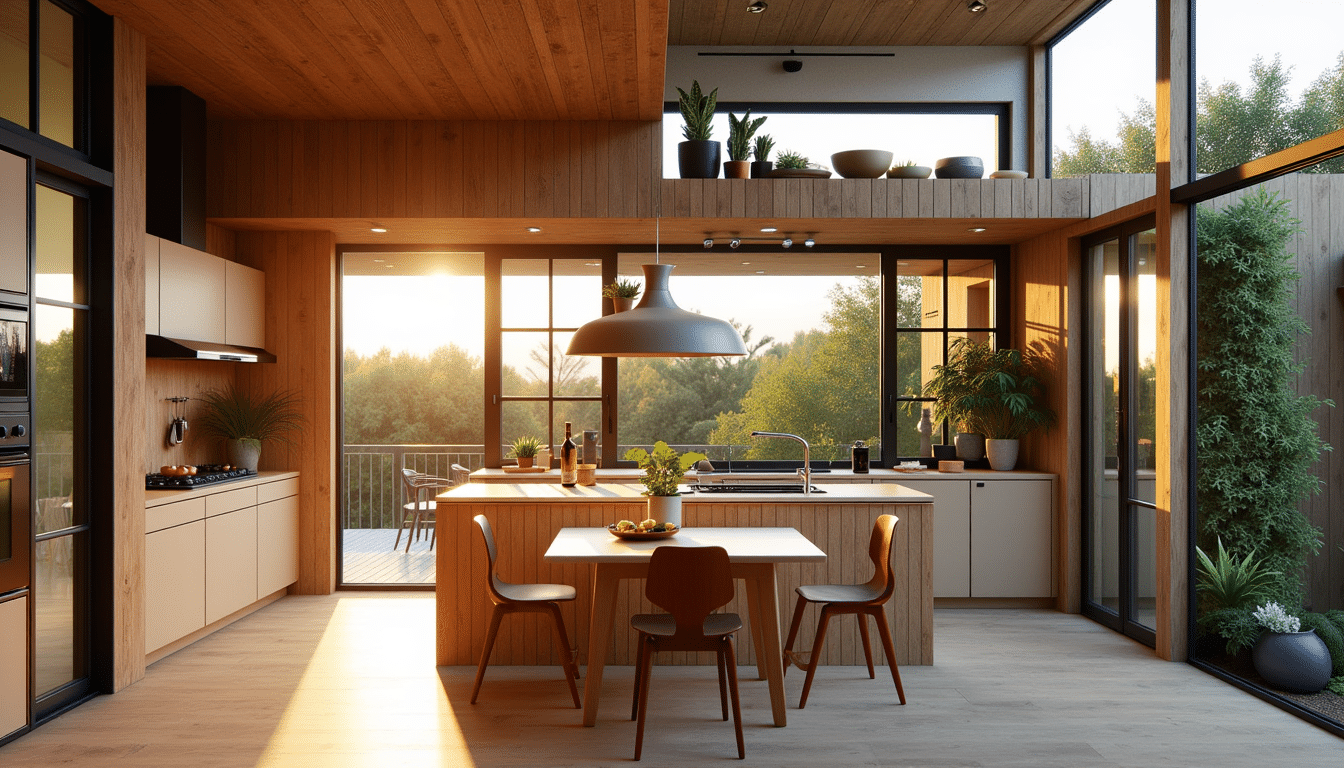
Broken plan kitchen with split levels and partial walls separating cooking and dining areas in warm evening light

13. Statement Sinks and Taps

The humble sink has evolved into a design feature, with farmhouse styles, copper finishes, and integrated draining boards offering both practicality and visual appeal. Similarly, taps have become focal points with architectural designs and special functions like filtered water or instant boiling water.

Upgrading just your sink and tap can refresh the entire kitchen’s look for relatively modest outlay – often under ยฃ500 for both elements.

14. Colour Trends for 2025

After years of grey and white dominating kitchen design, richer colours are making a welcome return. Deep forest greens, navy blues, and even dramatic blacks are featuring in cabinetry, while earthy terracottas and burnt oranges appear in accessories and feature walls.

For those preferring a more timeless approach, sage green and soft taupe offer subtler alternatives that won’t date quickly. Remember that colour can be introduced through accessories and easily changeable elements if you’re concerned about longevity.

For more on working with colour, see our guide to using colour psychology in home interiors.

15. Focus on Flooring

Flooring choices have expanded dramatically, with luxury vinyl tiles (LVT) offering water-resistance and comfort underfoot while convincingly mimicking natural materials. Porcelain tiles remain popular for their durability and ease of maintenance.

Underfloor heating works exceptionally well with stone or ceramic tiles and can free up wall space otherwise needed for radiators – particularly valuable in compact UK kitchens.

When selecting flooring, consider not just aesthetics but practical factors like maintenance requirements, durability in high-traffic areas, and compatibility with underfloor heating if planned.

Final Thoughts: Planning Your Kitchen Renovation

After guiding countless homeowners through kitchen renovations across Cumbria and beyond, I’ve found that the most successful projects share common elements: thorough planning, realistic budgeting, and a clear vision that balances trends with timelessness.

While it’s tempting to incorporate every exciting new idea, focus on elements that will enhance how you actually use your kitchen daily. The most beautiful design will ultimately disappoint if it doesn’t function well for your specific needs.

Remember that a well-executed kitchen renovation not only improves your daily life but also adds significant value to your property – typically between 5-10% according to Rightmove’s property experts.

My personal advice: Document your current kitchen’s pain points before planning your renovation. Those daily frustrations – insufficient counter space, awkward corner cabinets, poor lighting – should inform your priorities far more than passing trends. Address these fundamentals first, then layer in the aesthetic elements that bring you joy.

With thoughtful planning and the right team of professionals, your kitchen renovation can transform not just a room but your entire home experience.

What kitchen renovation ideas are you considering for your UK home? Share your plans in the comments below, and I’ll be happy to offer specific advice based on my 25 years in the industry.

Donโ€™t Miss a Thing!


Downloads

10 Stunning Kitchen Renovation Ideas Popular in the UK This Year

share this post

Bright modern kitchen with sage green cabinets, wood island, and large windows in a contemporary British home.

1. Open-Plan Living Continues to Dominate

The desire to connect cooking spaces with dining and living areas remains strong in 2025. Open-plan kitchens create a sense of spaciousness even in modest-sized UK homes, making them particularly popular in urban areas where space comes at a premium.

If you’re knocking through walls, consider a structural engineer’s input early. This isn’t just about aesthetics – it’s about ensuring your home remains structurally sound. For smaller properties, consider a partial open plan with a breakfast bar or peninsula to zone spaces without full walls.

While removing walls creates wonderful flow, remember that cooking smells and noise will travel more freely. Consider investing in a powerful extractor fan and appliances with quiet operation if this is a concern.

2. Sustainable Materials Take Centre Stage

Eco-conscious renovation has moved from niche to mainstream, with sustainable kitchen materials now widely available at various price points.

Reclaimed wood worktops, recycled glass splashbacks, and cabinets made from responsibly sourced timber all offer environmental benefits without compromising on style. Manufacturers like Howdens and Magnet now offer eco-friendly kitchen ranges that don’t sacrifice quality.

Look for FSC-certified wood products and kitchen suppliers with clear sustainability credentials. The initial investment might be slightly higher, but these materials often prove more durable in the long run.

Eco-friendly kitchen with reclaimed wood, recycled glass, and earth-toned FSC cabinets

3. Smart Storage Solutions for British Kitchens

UK homes – particularly period properties – often present storage challenges with their non-standard dimensions and quirky layouts. Customised storage solutions are worth their weight in gold.

Pull-out larder systems, corner carousel units, and drawer dividers can increase your usable space by up to 30%. Consider tall cabinets that extend to the ceiling to maximise vertical storage – particularly useful in terraced houses with limited floor space.

For more ideas on maximising kitchen storage, check out our guide on clever storage solutions for small UK kitchens.

Compact British kitchen with pull-out larders, corner carousels, and tall cabinets in soft lighting.

4. Statement Lighting as Focal Points

Lighting has evolved far beyond basic functionality to become a key design element in modern kitchens. Pendant lights over islands, LED strip lighting under cabinets, and strategically placed downlights all contribute to both atmosphere and practicality.

Mixed metallic fixtures are particularly popular in 2025, with brass, copper and matte black often appearing in the same kitchen for an eclectic yet cohesive look.

Consider how your lighting works at different times of day. Dimmable options and smart lighting systems allow you to transition from bright task lighting when preparing food to more atmospheric settings for dining.

5. Two-Tone Cabinet Finishes

Gone are the days when kitchens needed to be designed in a single colour. Two-tone cabinet schemes – typically with darker base units and lighter wall cabinets – create visual interest while making spaces feel larger.

Popular combinations in 2025 include navy and cream, forest green and white, or charcoal and light grey. This approach also allows you to introduce colour without overwhelming the space.

If a complete cabinet replacement isn’t feasible, consider repainting existing units in a two-tone scheme – a cost-effective way to achieve this contemporary look.

Two-tone kitchen with navy base cabinets, cream uppers, and metallic lighting accents

6. Worktop Materials Beyond Granite

While granite has long been the luxury standard, alternative worktop materials are gaining popularity for their unique properties:

  • Quartz composites offer durability and non-porous surfaces with consistent patterning
  • Porcelain provides heat resistance and a sleek, contemporary finish
  • Sustainable wood brings warmth and can be sanded and refinished multiple times
  • Recycled materials like terrazzo made from construction waste offer eco-credentials with distinctive aesthetics

The right choice depends on your budget, maintenance preferences, and overall design scheme. For high-traffic family kitchens, I typically recommend quartz for its combination of durability and low maintenance.

7. Statement Splashbacks

Splashbacks have evolved from purely practical features to design statements. Large-format porcelain tiles, continuous sheets of toughened glass, and even metal finishes create dramatic backdrops for cooking areas.

Splashbacks that extend from the worktop all the way to ceiling height behind shelving or range cookers create a striking focal point while being easier to clean than multiple surface transitions.

For more on creating impact with splashbacks, see our article on transformative kitchen splashback ideas.

8. Integrated Technology for Modern Living

Smart kitchens are no longer futuristic concepts but practical realities. From boiling water taps and induction hobs with integrated extraction to fridges that track your grocery inventory, technology is making kitchens more efficient and convenient.

Voice-activated lighting, temperature control, and appliance operation have become increasingly common, with systems like Google Home and Amazon Alexa integrated into the kitchen environment.

Ensure your kitchen renovation includes sufficient power points and data connectivity for current and future tech additions. USB charging points and hidden charging stations help keep devices powered without cluttering worktops.

9. Islands and Peninsulas with Multiple Functions

Kitchen islands continue to evolve beyond simple prep spaces to become multi-functional hubs incorporating:

  • Seating areas for casual dining
  • Integrated appliances like dishwashers or wine fridges
  • Storage solutions on both sides
  • Pop-up power points for flexible working

For smaller UK kitchens where a full island isn’t practical, peninsulas offer many of the same benefits while taking up less floor space. Some innovative designs now include sliding or fold-down sections to adapt to different needs throughout the day.

10. Return to Natural Materials

After years of high-gloss minimalism, there’s a definite shift toward natural materials and textures in kitchen design. Stone, wood, and ceramic finishes bring warmth and character to contemporary spaces.

This trend aligns with broader interest in biophilic design – connecting our homes with nature for wellbeing benefits. Consider incorporating plants, natural light, and organic materials to create a kitchen that feels connected to the outdoors.

Mix textures for visual interest – rough-hewn timber shelving against smooth stone worktops, or handmade tiles alongside sleek cabinetry creates pleasing contrast.

11. Budget-Friendly Cabinet Refreshes

A complete kitchen renovation can be costly, but cabinet refreshes offer dramatic results at a fraction of the price. Options include:

  • Professional respray services that transform existing units with factory-quality finishes
  • Replacement doors with existing cabinet carcasses retained
  • New handles and knobs for an instant update
  • Open shelving replacing selected wall units for a more spacious feel

According to Which?, replacing just the doors and worktops can save up to 70% compared to a full kitchen renovation while still delivering significant visual impact.

12. Broken-Plan Layouts

While open-plan remains popular, broken-plan layouts are emerging as a sophisticated alternative. This approach uses partial walls, different floor levels, structural elements, or furniture to create distinct zones while maintaining a sense of openness.

This works particularly well in UK homes where completely open spaces might feel drafty or lack cosiness during colder months. Consider using a breakfast bar, bookcase, or change in flooring to subtly define cooking, dining, and relaxation areas.

Broken plan kitchen with split levels and partial walls separating cooking and dining areas in warm evening light

13. Statement Sinks and Taps

The humble sink has evolved into a design feature, with farmhouse styles, copper finishes, and integrated draining boards offering both practicality and visual appeal. Similarly, taps have become focal points with architectural designs and special functions like filtered water or instant boiling water.

Upgrading just your sink and tap can refresh the entire kitchen’s look for relatively modest outlay – often under ยฃ500 for both elements.

14. Colour Trends for 2025

After years of grey and white dominating kitchen design, richer colours are making a welcome return. Deep forest greens, navy blues, and even dramatic blacks are featuring in cabinetry, while earthy terracottas and burnt oranges appear in accessories and feature walls.

For those preferring a more timeless approach, sage green and soft taupe offer subtler alternatives that won’t date quickly. Remember that colour can be introduced through accessories and easily changeable elements if you’re concerned about longevity.

For more on working with colour, see our guide to using colour psychology in home interiors.

15. Focus on Flooring

Flooring choices have expanded dramatically, with luxury vinyl tiles (LVT) offering water-resistance and comfort underfoot while convincingly mimicking natural materials. Porcelain tiles remain popular for their durability and ease of maintenance.

Underfloor heating works exceptionally well with stone or ceramic tiles and can free up wall space otherwise needed for radiators – particularly valuable in compact UK kitchens.

When selecting flooring, consider not just aesthetics but practical factors like maintenance requirements, durability in high-traffic areas, and compatibility with underfloor heating if planned.

Final Thoughts: Planning Your Kitchen Renovation

After guiding countless homeowners through kitchen renovations across Cumbria and beyond, I’ve found that the most successful projects share common elements: thorough planning, realistic budgeting, and a clear vision that balances trends with timelessness.

While it’s tempting to incorporate every exciting new idea, focus on elements that will enhance how you actually use your kitchen daily. The most beautiful design will ultimately disappoint if it doesn’t function well for your specific needs.

Remember that a well-executed kitchen renovation not only improves your daily life but also adds significant value to your property – typically between 5-10% according to Rightmove’s property experts.

My personal advice: Document your current kitchen’s pain points before planning your renovation. Those daily frustrations – insufficient counter space, awkward corner cabinets, poor lighting – should inform your priorities far more than passing trends. Address these fundamentals first, then layer in the aesthetic elements that bring you joy.

With thoughtful planning and the right team of professionals, your kitchen renovation can transform not just a room but your entire home experience.

What kitchen renovation ideas are you considering for your UK home? Share your plans in the comments below, and I’ll be happy to offer specific advice based on my 25 years in the industry.

I'm Neil

the Editor of HomeWise. This site is built for homeowners and renters who want to stay smart, save money, and get the most from their home.
Come back often โ€” weโ€™re just getting started.

Donโ€™t Miss a Thing!

Get the latest home tips, tricks, and inspiration delivered to your inbox

๐Ÿ’ก Quick Tips

๐Ÿ’ก

Quick Tip:

Switch to LED bulbs to reduce electricity usage.

โ€” Eco Living Crew